

close
Choose Your Site
Global
Social Media
Views: 334 Author: Site Editor Publish Time: 2026-03-09 Origin: Site


When we discuss fluid control in heavy-duty systems, the material of the hardware determines its lifespan. A Bronze Valve is a staple in plumbing, maritime, and manufacturing industries, but what exactly goes into its construction? Many people confuse bronze with brass or cast iron, yet its chemical makeup provides unique advantages that other metals lack. Understanding these components is essential for procurement officers and engineers who need reliable performance in demanding environments.
The core intent of this guide is to deconstruct the elemental profile of a Bronze Valve. We will explore the primary alloys used, how they achieve a Corrosion resistant finish, and why specific additives make them suitable for High pressure applications. By the end of this article, you will have an expert-level understanding of the "recipe" behind one of the most trusted components in the Industrial sector.
At its most basic level, a Bronze Valve is a copper-based alloy. While brass relies on copper and zinc, bronze is primarily a mixture of copper and tin. This distinction is what gives it superior mechanical strength and a distinct reddish-brown hue.
Copper usually makes up 80% to 90% of the valve body. It provides the base ductility and thermal conductivity needed for fluid transport. Because copper is naturally Corrosion resistant, it ensures the Bronze Valve does not rust like carbon steel when exposed to moisture.
Tin is the traditional alloying element that transforms soft copper into hard bronze. It increases the metal's hardness and resistance to wear. In an Industrial setting, this means the valve seats and stems can withstand thousands of cycles without deforming. Without tin, the valve would be too soft to handle the torque required for a tight seal in a Threaded connection.
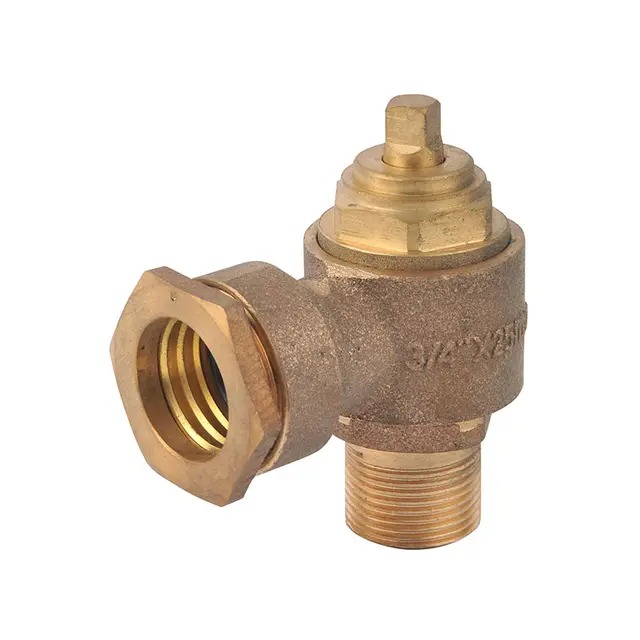
Modern manufacturing rarely uses "pure" bronze. To create a High-quality Bronze Valve, we add secondary elements that fine-tune its performance. These additives determine if the valve is easy to machine or if it can handle potable water.
Zinc is often added in small percentages to improve the flow of the molten metal during the casting process. It helps create a smoother surface finish on a Flanged Bronze Valve. However, if the zinc content is too high, the metal starts to behave more like brass, which is less resistant to seawater corrosion.
Historically, lead was added to improve machinability. It acted as a lubricant for cutting tools. Today, strict health regulations require a Lead free Bronze Valve for any application involving drinking water. Manufacturers now use bismuth or silicon as substitutes to maintain the "easy-cut" property while ensuring the product is safe for human consumption.
| Element | Typical % | Primary Purpose |
| Copper | 85-90% | Base metal, corrosion resistance |
| Tin | 5-10% | Hardness and structural strength |
| Zinc | 2-5% | Casting fluidity and cost balance |
| Lead/Bismuth | 0-2% | Machinability (Prefer Lead free for water) |
Not all bronze is created equal. Depending on the chemical ratios, a Bronze Valve can be categorized into different "grades" that suit specific Industrial needs.
When a system operates under High pressure, engineers often specify aluminum bronze. By replacing some tin with aluminum, the metal gains incredible tensile strength. This version is frequently found in Flanged configurations for oil and gas pipelines. It develops a thin, protective alumina layer on the surface, making it exceptionally Corrosion resistant even in acidic environments.
Often referred to as "Red Brass" in some regions, this is the classic 85-5-5-5 alloy (85% copper, 5% tin, 5% zinc, 5% lead). It is the most common material for a Threaded Bronze Valve. It offers a perfect balance of cost and performance for general steam and water services. It is easy to cast and provides a reliable seal that lasts for decades.
The most compelling reason to choose a Bronze Valve is its ability to fight decay. Unlike iron, which flakes away as it oxidizes, bronze undergoes a different chemical reaction when exposed to the elements.
When a Bronze Valve is installed in a marine or underground environment, it reacts with oxygen to form a "patina"—that characteristic green or dark brown skin. This layer is not "rust"; it is a stable shield. It prevents oxygen from reaching the deeper layers of the metal. This makes the valve virtually immune to the pitting that destroys steel valves in saltwater.
In maritime applications, sea life like barnacles can clog Industrial equipment. Copper-based alloys like bronze have natural antimicrobial properties. They release minute amounts of ions that prevent aquatic organisms from sticking to the valve body. This ensures a Flanged intake valve remains clear and functional over long voyages.
Understanding what a Bronze Valve is made of also requires looking at the regulatory standards. These numbers tell procurement officers exactly which "recipe" was used during the melt.
These are the two most common specifications you will see on a High-quality Bronze Valve.
ASTM B62: Used for standard utility valves. It handles temperatures up to 400°F and is the foundation for most Threaded plumbing components.
ASTM B61: This is a "higher grade" bronze often called "Steam Bronze." It has a higher tin content and is rated for High pressure steam systems up to 550°F.
Manufacturers must perform chemical analysis on every heat batch. We use spectrometers to verify that the copper, tin, and zinc levels match the required ASTM code. This ensures that every Bronze Valve delivered to a job site will not fail under the stress of thermal expansion or high-velocity fluid flow.
While a Bronze Valve is excellent for many uses, its material properties change as heat increases. Unlike stainless steel, bronze starts to lose significant structural integrity once temperatures exceed 550°F (288°C). If your system runs hotter than this, the copper-tin bond begins to weaken, leading to potential leaks.
The manufacturing method often dictates the connection type. Threaded valves are typically cast from softer, more ductile bronze grades to allow for precision tapping of the threads. Conversely, a Flanged Bronze Valve might use a more rigid alloy because the flange face needs to remain perfectly flat under the compression of heavy bolts.
Many believe that bronze is only for low-pressure residential plumbing. This is a misconception. When engineered correctly, a Bronze Valve is a powerhouse in High pressure Industrial settings.
A Bronze Valve is often rated in "Classes." A Class 300 valve is designed to handle significantly higher internal stress than a standard Class 125 model. To achieve this, we increase the wall thickness of the casting and use aluminum bronze or silicon bronze alloys. This allows the valve to stay Flexible enough to avoid cracking while being strong enough to contain surging liquids.
In the 19th and 20th centuries, bronze was the primary metal for steam engines. Today, it remains vital for "Trim" parts in larger valves. Even if a valve body is made of steel, the internal "Wetted" parts are often made of a Bronze Valve alloy to ensure the moving components stay Corrosion resistant and smooth throughout their service life.
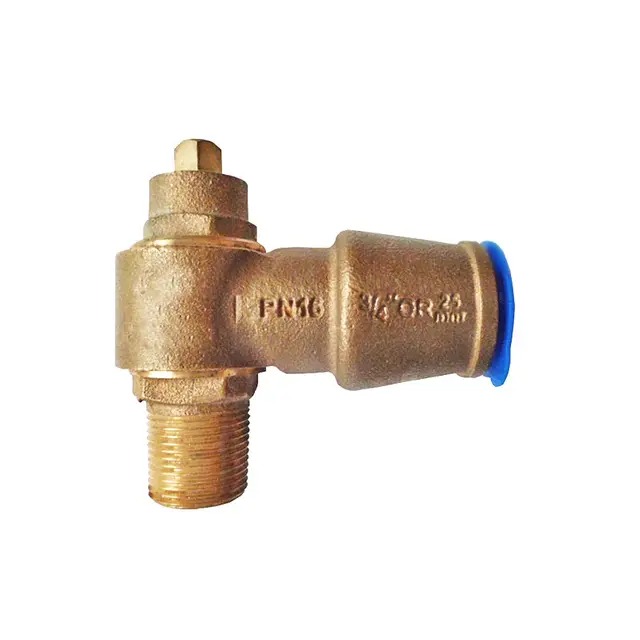
In the last decade, the chemical makeup of the Bronze Valve has changed more than in the previous century. The "What" in "What is it made of?" now almost always excludes lead for residential and commercial water systems.
To make a Lead free Bronze Valve, we replace lead with bismuth. Bismuth provides the same "chip-breaking" properties during machining but does not leach into the water. This transition was a massive engineering hurdle, as bismuth makes the metal more brittle. High-quality manufacturers have perfected the cooling rates during casting to ensure these Lead free valves are just as Durable as their predecessors.
Always look for the "LF" marking on the valve body. A Lead free Bronze Valve will also have a different color internally—often appearing more yellowish due to the specific grain structure of the bismuth-copper mix. For any contractor working on a school or hospital project, verifying this material composition is a legal necessity.
A Bronze Valve is far more than just "old-fashioned copper." It is a carefully balanced chemical solution designed to solve the three biggest problems in fluid control: pressure, heat, and corrosion. By mixing copper with tin and secondary elements like zinc or aluminum, we create a tool that is Corrosion resistant, capable of High pressure endurance, and safe for Lead free environments. Whether you need a simple Threaded gate valve or a massive Flanged globe valve, knowing the metallurgy ensures you pick the right tool for the job.
Q: Is a Bronze Valve better than a Brass Valve?
A: For Industrial and marine use, yes. Bronze is much more Corrosion resistant to salt and acids. Brass contains more zinc, which can "dezincify" and become brittle over time in harsh water conditions.
Q: Can I use a Bronze Valve for high-pressure steam?
A: Yes, provided it is an ASTM B61 (Class 300) rated valve. These are specifically made of "Steam Bronze" designed to handle the thermal stress of pressurized steam.
Q: Why are bronze valves more expensive than iron ones?
A: The cost is driven by the copper and tin content. Copper is a semi-precious metal with high global market value. However, the long lifespan and Corrosion resistant nature of the Bronze Valve mean it usually has a lower total cost of ownership than iron.
We have spent years studying the intricacies of metal casting and valve engineering to ensure our clients receive the best hardware on the market. At our company, we operate a world-class manufacturing facility that bridges the gap between traditional craftsmanship and modern technology. Our factory is equipped with advanced induction furnaces that allow us to control the melt temperature of a Bronze Valve with extreme precision. This ensures that the copper-to-tin ratio is perfect in every batch.
We take pride in our ability to produce both Threaded and Flanged solutions for the global Industrial market. Our strength lies in our rigorous testing lab, where we perform 100% pressure testing and spectroscopic analysis on our Corrosion resistant alloys. We don't just sell valves; we provide peace of mind for engineers who need High pressure reliability. Whether you are looking for a standard catalog item or a Lead free solution for a specific project, our facility is built to handle the most demanding specifications with speed and accuracy.


