

close
Choose Your Site
Global
Social Media
Views: 224 Author: Site Editor Publish Time: 2026-03-04 Origin: Site


When you are designing a piping system or managing an Industrial facility, the choice between bronze and brass can feel like a toss-up. Both are copper alloys, and they look remarkably similar on the shelf. However, picking the wrong one leads to premature failure, leaks, and costly downtime. The core question, "Which is better?", doesn't have a single answer; it depends entirely on your specific environment, budget, and fluid type.
In this comprehensive guide, we break down the technical "Expert Insight" into why a Bronze Valve might be your savior in saltwater environments while brass serves as the cost-effective champion for general plumbing. We will explore metallurgy, Corrosion resistant properties, and pressure ratings. By the end, you will know exactly which alloy fits your needs, ensuring your Industrial project remains safe and efficient.
To understand which is better, we must look at what is inside these metals. Bronze is primarily copper mixed with tin. This combination creates a very hard, Durable material. Brass, on the other hand, is a mix of copper and zinc. While zinc makes brass easier to machine and shape, it also introduces specific vulnerabilities.
A Standard Bronze Valve often contains about 88% copper and 12% tin. This mixture is naturally Corrosion resistant, especially against saltwater. Because it is a cast metal, it usually has a slightly rough, "sand-blasted" exterior. It is the preferred choice for High pressure scenarios where the metal needs to withstand significant physical stress without cracking.
Brass valves are typically made from about 60-70% copper and 30-40% zinc. They have a smoother, shinier finish than bronze. They are excellent for Threaded connections because the metal is softer and can be machined to very tight tolerances. However, brass is susceptible to "dezincification"—a process where the zinc leaches out of the alloy in certain water conditions, leaving behind a weak, porous copper shell.
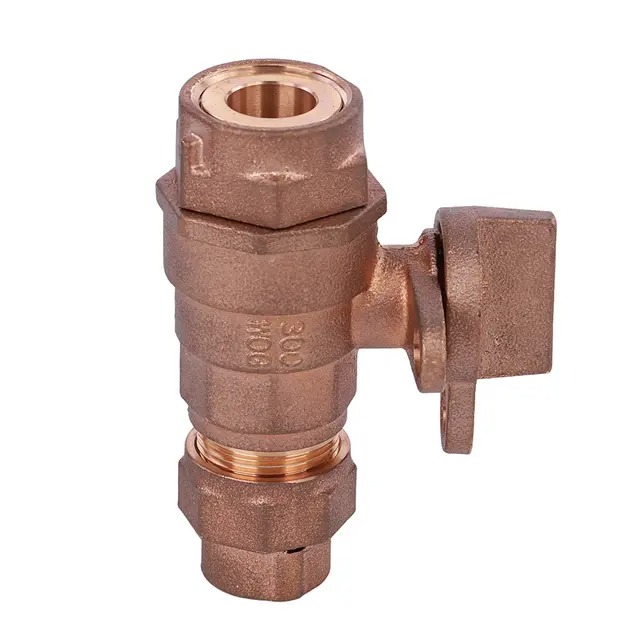
Corrosion is the number one enemy of any Industrial valve. If your fluid is aggressive, your choice of alloy becomes a matter of survival for your piping system.
In marine applications, the Bronze Valve is the undisputed king. Tin is much more stable than zinc when exposed to chloride ions. Bronze develops a protective "patina" (that greenish layer) which actually shields the underlying metal from further decay. If you use brass in the ocean, it will likely fail within a year due to the salt eating away the zinc.
For standard drinking water, brass is often the "better" choice because it is cheaper and easier to manufacture in mass quantities. Many modern brass valves are now Lead free, making them safe for home use. Bronze is also safe and Corrosion resistant, but its higher cost is often unnecessary for a simple home faucet or garden hose connection.
| Environment | Recommended Alloy | Primary Reason |
| Marine/Saltwater | Bronze Valve | Superior Corrosion resistant properties |
| Natural Gas | Brass | High machinability for Threaded seals |
| Industrial Chemicals | Bronze Valve | Better resistance to "Dezincification" |
| Low-Pressure Plumbing | Brass | Cost-efficiency and availability |
When a system moves into High pressure territory, the physical strength of the alloy takes center stage. This is where the "casting" process of bronze shows its worth.
A Bronze Valve is typically thicker and heavier than its brass counterpart. This extra mass allows it to handle thermal expansion and contraction much better. In steam systems or high-heat Industrial processes, bronze maintains its structural integrity. It won't warp as easily as brass when the temperature spikes.
While there are High pressure brass valves, they are often limited to smaller sizes. Because brass is more "malleable," it can deform under extreme force. If your system involves "water hammer" (sudden pressure surges), the Bronze Valve provides a much higher safety margin. It is simply a tougher material that handles the physical "beating" of heavy industry with more grace.
How you connect the valve to your pipes often determines which metal is "better" for the job. The choice between Threaded and Flanged designs is a major factor for procurement officers.
Because brass is softer, manufacturers can cut incredibly precise threads into it. This makes a Threaded brass ball valve a favorite for gas lines and small-scale fluid transfer. The threads bite into each other well, creating a leak-proof seal with minimal effort.
For larger pipes (typically 2 inches and above), a Flanged connection is usually required. Most Flanged copper-alloy valves in the Industrial sector are made of bronze. The casting process allows for the creation of thick, sturdy flanges that can be bolted tightly without the risk of the metal snapping. If you need a large-diameter Bronze Valve, you are almost certainly looking at a flanged design to ensure a secure, permanent fit.
In the 21st century, the health impact of our plumbing is a top priority. Both bronze and brass have traditionally contained small amounts of lead to make the metal easier to machine.
Modern regulations now require Lead free components for any system carrying water for human consumption. Both alloys have adapted. You can find Lead free brass (often using bismuth or silicon instead of lead) and Lead free bronze. However, the manufacturing process for Lead free bronze is often more expensive.
In a closed-loop Industrial cooling system or an oil line, Lead free status isn't usually required. In these cases, the traditional alloys are still used because they are easier to work with and slightly more Durable. As a buyer, you must check your local building codes to see if your specific application mandates the Lead free version of a Bronze Valve.
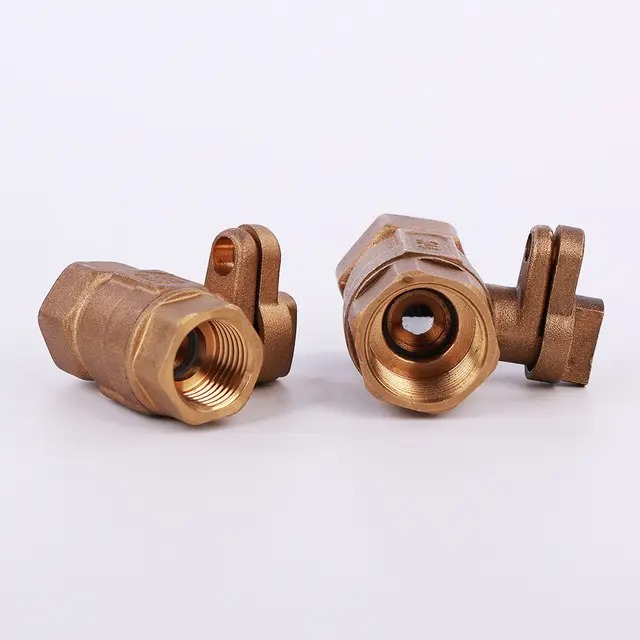
Every project has a budget. If you choose a Bronze Valve for every single connection in a simple office building, you are wasting money. If you choose brass for a chemical plant, you are inviting a disaster.
Brass is almost always cheaper upfront. It uses less copper and the manufacturing process is faster. However, if that brass valve fails every two years and requires a full system shutdown to replace, the "cheap" valve becomes incredibly expensive.
In Industrial settings, the cost of the valve is tiny compared to the cost of a leak. A Premium Bronze Valve is a "set it and forget it" solution. Its Corrosion resistant nature means it can sit in a pipe for twenty years without seizing or leaking. For professionals, the long-term lifecycle value of bronze far outweighs the initial savings of brass.
To answer the user's primary concern, we have broken down the "Better" choice by specific criteria.
You are working with seawater or brackish water.
The system is a High pressure steam or heavy Industrial line.
You need a large Flanged valve for a permanent installation.
The fluid is slightly acidic or aggressive.
The project is for residential plumbing or HVAC.
You need a small, Threaded valve for air or natural gas.
Budget is a primary constraint and the environment is non-corrosive.
You require a very smooth internal finish for high-velocity flow.
How do you tell them apart if the labels are gone? It is a common problem for maintenance crews.
Color: Brass is typically a bright, yellowish-gold. Bronze is a darker, reddish-brown (like a penny).
Texture: Feel the body of the valve. If it feels grainy or like it was made from sand, it is likely a cast Bronze Valve. If it is perfectly smooth with crisp edges, it is probably forged brass.
Markings: Look for the "C" numbers. C83600 or C84400 usually indicates bronze. C360 or C377 usually indicates brass.
So, which is better? If you want the most Durable, Corrosion resistant, and High pressure capable option for a demanding Industrial environment, the Bronze Valve wins every time. It is the workhorse of the sea and the refinery. However, for the vast majority of everyday, low-stress applications, brass is the "better" choice because it provides excellent performance at a fraction of the cost. Understanding the chemistry of your fluid and the pressure of your system is the only way to make the right call.
Q1: Can I use a brass valve on a boat?
A: We strongly advise against it. Saltwater will cause "dezincification" in brass, making the metal brittle and porous. Always use a Bronze Valve for marine through-hull fittings.
Q2: Is bronze more expensive than brass?
A: Yes. Because it has a higher copper content and uses tin instead of zinc, the raw material costs are higher. The casting process also adds to the final price.
Q3: Does a Bronze Valve come in Lead free versions?
A: Yes, many manufacturers offer Lead free bronze alloys (like C87850) to meet modern safety standards for drinking water systems.
I have spent years studying the flow of fluids and the strength of metals. At our company, we operate a premier manufacturing facility dedicated to the production of high-grade Industrial valves. Our factory is more than just an assembly line; it is a center of metallurgical excellence. We specialize in crafting both Flanged and Threaded solutions that meet the most rigorous international standards. Our team understands that in a High pressure environment, there is no room for compromise.
We take pride in our ability to produce a Bronze Valve that is truly Corrosion resistant and built for the long haul. Our strength lies in our quality control; every casting is inspected for porosity and every finished valve is pressure-tested before it leaves our floor. We don't just sell parts; we provide the peace of mind that comes with knowing your infrastructure is supported by the best materials available. Whether you are looking for Lead free options for a municipal project or Premium alloys for an offshore rig, we have the capacity and the expertise to deliver.


