

close
Choose Your Site
Global
Social Media
Views: 0 Author: Site Editor Publish Time: 2026-02-25 Origin: Site


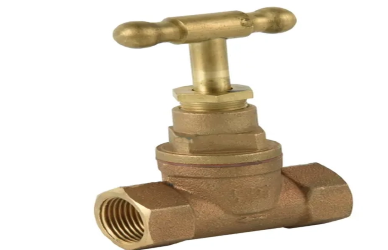
Valves are critical components in plumbing, industrial systems, and fluid control. When discussing valves, two common types often arise: stop valves and gate valves. While both valves serve important roles in managing the flow of liquids and gases, they are designed differently and used in distinct scenarios. This article explores whether a stop valve is the same as a gate valve, their differences, similarities, and applications to help you choose the right valve for your system.
A stop valve is a type of valve used to control the flow of liquid or gas in a pipeline. The primary function of a stop valve is to regulate or stop the flow entirely when needed. These valves are commonly used in both residential and industrial applications where precise control of the flow is essential.
There are several variations of stop valves, each suited to different flow control needs:
Globe Valve: Ideal for regulating flow, as it has a baffle that guides the fluid path.
Ball Valve: Known for its quick shut-off functionality, used in gas and liquid systems.
Needle Valve: Used for very fine flow control, often in laboratory or industrial applications.
Each type of stop valve can be used for specific applications where precise flow control or emergency shut-off is needed.
A stop valve works by controlling the movement of an internal component (like a ball or globe) to either allow or restrict the flow of fluid. When the valve is turned or actuated, the internal mechanism moves to either open or close the passage. This allows for either a smooth flow or a complete shut-off of the fluid or gas. The ability to fine-tune the flow makes stop valves highly versatile for both residential and industrial systems.
A gate valve, on the other hand, is primarily designed to isolate or shut off the flow of fluid, rather than regulating it. It uses a gate mechanism, often a wedge-shaped metal part, that moves vertically to either block or allow the flow of liquid or gas.
There are two main types of gate valves:
Rising Stem Gate Valve: The stem rises as the valve is opened or closed, providing a visual indication of the valve’s position.
Non-Rising Stem Gate Valve: The stem does not rise; it remains stationary, making it suitable for space-constrained installations.
A gate valve operates by lifting a gate into the flow path, creating a barrier that fully isolates the flow when the valve is closed. This design is best suited for situations where full flow control or isolation is needed, rather than precise regulation. Gate valves are designed to either open or close the pipeline completely, and they are commonly used in systems that do not require fine flow adjustments but need full control over the flow path.
Although both stop valves and gate valves control the flow of fluids, they differ significantly in their design, operation, and use cases. Let’s break down the most important distinctions:
Feature | Stop Valve | Gate Valve |
Design Structure | Uses a baffle or ball mechanism | Uses a wedge or gate mechanism |
Flow Control | Regulates or completely stops flow | Primarily used for on/off isolation |
Movement | Internal element moves (ball, globe) | Gate moves vertically to block flow |
Stop Valves: These valves are designed to regulate flow, meaning they can be adjusted to partially allow or stop the flow entirely. This makes them suitable for applications that require flow regulation or fine adjustments.
Gate Valves: However, gate valves are best used for complete isolation or shut-off. They do not regulate flow but instead either allow full flow or completely stop it. The mechanism in gate valves is designed to either open or close the flow path entirely.
Stop Valves: Commonly used in residential plumbing systems, gas systems, and industrial applications where the flow needs to be controlled or stopped on demand. They are often used in systems that require frequent operation or fine adjustments.
Gate Valves: Gate valves are more suitable for large diameter pipelines or systems where you need to isolate sections of the pipeline completely. They are commonly found in oil and gas pipelines, water treatment facilities, and large industrial systems.
Valve Type | Flow Control Type | Flow Restriction |
Stop Valve | Regulates or completely stops flow | Minimal flow resistance |
Gate Valve | Full shut-off or open, no regulation | High flow resistance when fully open |
Stop Valves are designed for moderate or fine flow control, whereas Gate Valves create significant flow resistance when they are fully open due to their structure.
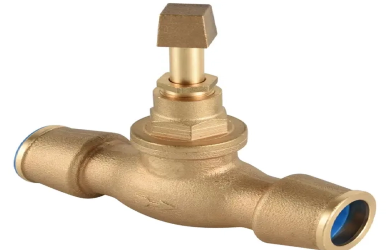
Choosing between a stop valve and a gate valve largely depends on the specific requirements of your system. Here are a few scenarios to help guide your decision:
Flow Regulation is Needed: If your application requires precise control of flow, a stop valve (especially a globe valve) is ideal.
Frequent Adjustments Are Required: If you need to adjust the flow regularly, stop valves offer more flexibility in controlling the rate of flow.
Full Isolation is Needed: Gate valves are the best option when you need to isolate a section of the pipeline completely, such as in an emergency shut-off situation.
Large-Diameter Pipelines: Gate valves are often used in larger pipelines (such as those in the oil and gas industry) where minimal flow regulation is needed.
Both stop valves and gate valves offer distinct advantages and disadvantages based on their intended use. Below is a comparison of their pros and cons:
Precise Flow Control: Ideal for applications where fine adjustments are needed.
Quick Shut-Off Capability: Can provide a quick and reliable shut-off when necessary.
Versatility: Suitable for a wide range of fluids, including liquids, gases, and slurries.
Higher Flow Resistance: Due to the design of the valve, they can create more resistance to flow than gate valves.
Frequent Maintenance: Some stop valves require more maintenance due to their complex internal mechanisms.
Minimal Flow Resistance: When fully open, gate valves allow for full, uninterrupted flow.
Simple Design: Gate valves are simpler in design compared to stop valves, making them easier to maintain.
Limited Flow Control: Gate valves are not designed for regulating flow. They are only for isolation or shut-off.
Slower Operation: Gate valves take longer to open and close compared to stop valves, which may not be ideal for fast adjustments.
No, a gate valve is primarily designed for on/off isolation and does not regulate flow like a stop valve can. While gate valves can completely shut off or open a pipeline, they do not offer the fine control or adjustable flow rate that stop valves provide, which are specifically designed for regulating fluid flow.
Stop valves are generally better for quick shut-off, especially ball valves, which offer fast operation. Ball valves, a type of stop valve, allow for nearly instantaneous shut-off by simply rotating the handle, making them ideal for emergency situations. In comparison, gate valves take more time to fully open or close, making them less suitable for applications requiring rapid flow changes.
Yes, stop valves can be used in large pipeline systems, but their effectiveness depends on the application. For systems requiring fine flow control, stop valves are appropriate, even for large pipelines. However, in systems where complete flow isolation is the goal and fine regulation is not necessary, gate valves are typically more suitable due to their ability to handle large volumes of fluid with minimal resistance when fully open.
Gate valves are simpler in design, which generally makes them easier to maintain than stop valves, especially in large industrial applications. The gate valve's straightforward mechanism (a gate that either blocks or allows flow) requires less frequent maintenance compared to stop valves, which have more complex moving parts. However, the maintenance needs can vary depending on the valve material, environment, and frequency of use.
In conclusion, while both stop valves and gate valves are used for controlling fluid and gas flow, they serve distinct purposes. Stop valves are ideal for applications where flow regulation or fine adjustments are necessary, while gate valves are used primarily for isolating or shutting off the flow completely. Understanding the differences in their design, functionality, and ideal applications will help you select the right valve for your system, ensuring efficient operation and long-term reliability.


