

close
Choose Your Site
Global
Social Media
Views: 0 Author: Site Editor Publish Time: 2026-10-12 Origin: Site


Incorrectly sizing your utility enclosure carries severe operational risks. Crushed utility lines, code violations, or denied municipal approvals can halt a project instantly. You might face costly excavations if you install the wrong unit. Worse, poor sizing often leads to long-term pipe stress and underground leaks.
A water meter box is never a one-size-fits-all solution. Your selection depends heavily on meter dimensions and complex piping layouts. You must also account for critical load-bearing requirements and strict local utility regulations. These factors directly dictate the structural and spatial needs of the enclosure you purchase.
We provide a definitive, evidence-based framework here. You will learn how to specify the exact dimensions and materials required for your project. This guide covers residential, commercial, and municipal applications thoroughly. We will help you navigate compliance standards, select proper materials, and avoid common installation failures.
Size vs. Clearance: The box must accommodate not just the meter, but also valves, reading equipment, and required working clearance for maintenance.
Material Dictates Application: Plastic is suited for residential landscaping, while ductile/cast iron is mandatory for traffic-rated zones.
Compliance is Non-Negotiable: Local municipal codes (e.g., AWWA, ASTM standards) dictate minimum dimensions and load ratings based on the installation environment.
Residential vs. Commercial: Commercial meters require significantly larger footprints due to bypass lines and peak flow engineering requirements.
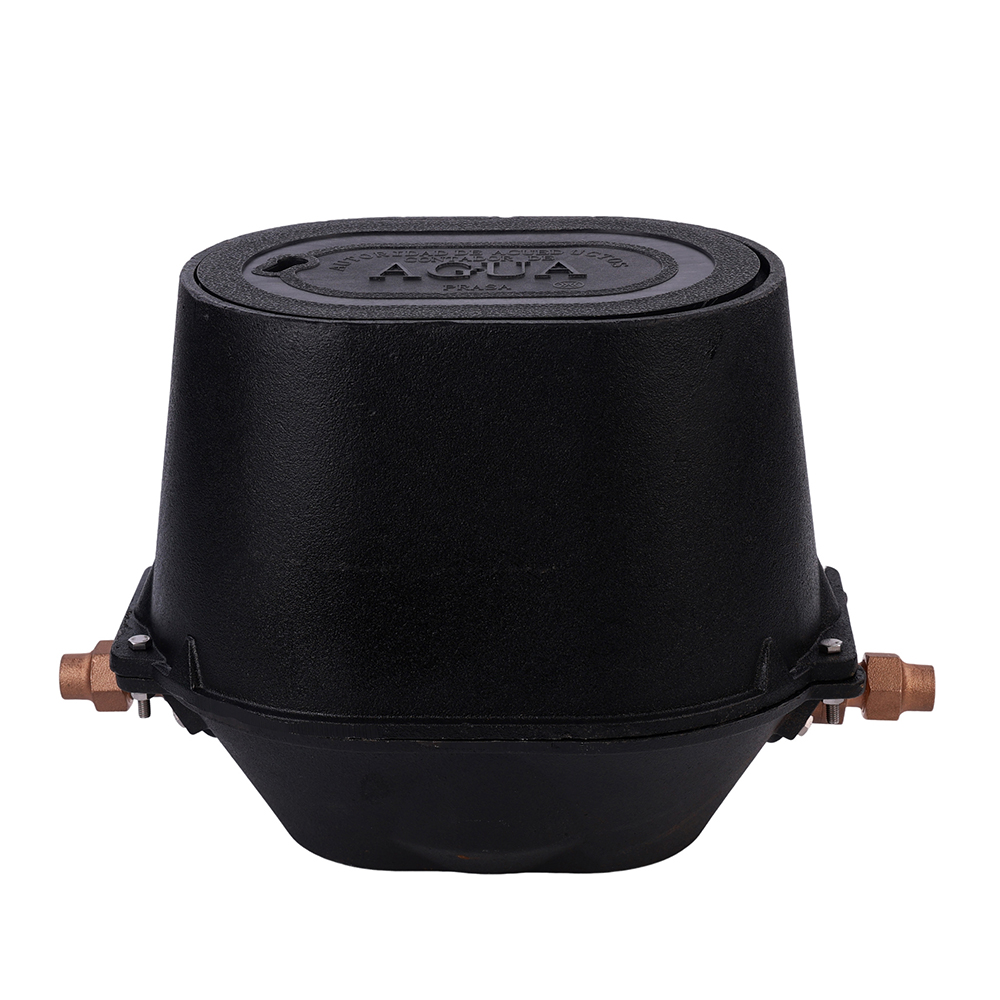
Engineers recommend a strict minimum clearance around the entire utility assembly. You typically need two to four inches of open space on all sides. This gap allows plumbers to maneuver heavy wrenches easily during routine maintenance. Cramped enclosures inevitably lead to stripped threads and broken knuckles. You must prioritize this "Rule of Thumb" before making any purchasing decisions.
Do not just measure the bare meter itself. You must calculate the entire laying length of the assembly. This measurement includes the meter, setter, couplings, and all shut-off valves. You must also add any check valve assemblies to your total measurement. Failing to measure the total laying length remains a top reason for failed municipal inspections.
Regional climates heavily influence the required burial depth. You must install the meter well below your local frost line. This depth prevents winter freezes from shattering pressurized pipes. Deep installations often require specific structural extensions or stackable risers. You utilize these risers to bring the lid entirely flush against the surface grade.
Modern utilities increasingly rely on Automated Meter Reading (AMR) networks. These wireless systems require specific vertical clearance inside the vault. You must leave adequate room for antennas beneath the lid structure. Signal interference happens rapidly when lids rest directly against transmitting modules. You must verify AMR compatibility before sealing the installation.
Follow these specific steps to measure your assembly correctly:
Measure the bare body length of the meter unit.
Add the physical lengths of all valves, setters, and brass couplings.
Add four extra inches to the total width and length for wrench clearance.
Verify the total assembly depth against the regional frost line requirements.
Standard home setups generally utilize 5/8”, 3/4”, or 1” meters. These setups require relatively compact enclosures. You usually place them in front lawns, sidewalks, or residential flower beds. The physical footprint must blend seamlessly into the surrounding landscaping. A standard rectangular or round unit handles these residential dimensions perfectly.
Landscaping integration remains a critical factor for homeowners. You want the lid to sit flush against the grass to avoid mower damage. Many residential units feature green or black lids for aesthetic camouflage. You rarely need massive industrial vaults for a single-family home.
Commercial facilities demand massive water volumes daily. They utilize 1.5”, 2”, or significantly larger compound and turbine meters. These complex assemblies require substantially larger spatial footprints. You must accommodate numerous commercial necessities inside the protective vault. These additions often include bypass valves, large strainers, and pressure-reducing valves (PRVs).
Engineers must manage peak flow variables carefully during spatial planning. Pressure drop calculations often force the use of wider, intricate piping arrangements. You cannot cram these components into standard residential enclosures safely. Commercial sites frequently utilize large precast concrete vaults or heavy-duty iron assemblies. You must ensure maintenance crews have physical space to enter the vault safely.
A Plastic Water Meter Protection Box excels in specific lightweight environments. You will use these primarily in non-traffic residential areas like lawns and flower beds. They offer extremely high corrosion resistance against wet, acidic soils. They remain incredibly lightweight, which simplifies installation for single contractors.
However, plastic units lack serious structural integrity. They cannot withstand heavy, concentrated loads. Lawn mowers might chip the exterior edges over time. You should never install them where vehicles might park or drive. Despite these limits, they provide excellent value for standard pedestrian zones.
A Cast Iron Water Meter Protection Box represents a traditional municipal standard. You find these heavily deployed across legacy municipal grids and light-vehicular traffic areas. They offer exceptional durability and unmatched stability. Their heavy weight naturally prevents them from floating upward in areas experiencing high water tables.
They do carry specific drawbacks over long periods. Traditional cast iron remains susceptible to long-term soil corrosion and rust. Furthermore, it can experience brittle failure under extreme, localized point loads. A sudden, massive impact can crack standard cast iron completely in half.
A Ductile Iron Water Meter Protection Box provides modern industrial performance. You specify these for heavy traffic zones, busy commercial driveways, and modern municipal infrastructure. Ductile iron features unique metallurgical properties. It actually bends slightly before breaking under immense stress.
It provides incredibly high tensile strength and superior impact resistance. It also features a lower weight-to-strength ratio compared to standard cast iron. You pay a premium for this material, but you gain immense reliability. It protects vital infrastructure from heavy semi-trucks and commercial delivery vehicles perfectly.
Material Evaluation Chart
Material Type | Ideal Use Case | Key Advantage | Primary Limitation |
|---|---|---|---|
Plastic | Residential lawns, gardens | High corrosion resistance, lightweight | Cracks under vehicular traffic |
Cast Iron | Sidewalks, light traffic areas | Heavy weight prevents soil floating | Prone to rust and brittle failure |
Ductile Iron | Driveways, heavy commercial zones | Superior impact and tensile strength | Higher upfront procurement cost |
You must decode structural load classifications before purchasing any enclosure. Municipalities utilize strict rating systems. Tier 15 ratings handle light duty and occasional driveway traffic effectively. Tier 22 ratings support heavy, deliberate traffic loads like commercial roadways. Putting a non-traffic rated lid in a driveway guarantees eventual collapse and liability issues.
Municipal inspectors look for very specific technical specifications during sign-off. They verify compliance against American Water Works Association (AWWA) guidelines. They also demand proof of ASTM load testing results. If your installed unit lacks proper certification markings, inspectors will fail the site immediately. You will then have to excavate and replace the unit at your own expense.
The lid material matters just as much as the primary body. Security remains a top priority for modern utilities. Tamper-proof locking mechanisms prevent unauthorized access to critical utility lines. You must match the lid to the specific AMR signal requirements. Iron lids block radio waves, so municipalities often mandate specialized composite lids for wireless reading compatibility.
Excavating a hole too small guarantees immediate installation problems. Lacking a proper gravel base leads to rapid, uneven soil settlement. When the unit settles improperly, it places severe downward stress on the underlying pipes. This stress eventually causes underground leaks and massive emergency repair bills.
Field plumbers constantly complain about tightly sized units. Sizing the enclosure exactly to the bare meter dimensions creates a true maintenance nightmare. Technicians cannot physically fit their tools inside to tighten or loosen couplings. We call this the "squeeze" factor. Always upsize the enclosure slightly to ensure fast, safe maintenance access.
Ground moisture always needs an escape route. Selecting a unit without adequate bottom drainage leads to total system disaster. You must ensure a proper gravel base sits directly below an open-bottom design. Poor drainage creates submerged meters. Standing water ruins delicate AMR electronics and significantly accelerates metal corrosion.
Review these best practices to ensure a flawless installation:
Always excavate six inches deeper than the unit height to accommodate a gravel base.
Center the entire meter assembly directly beneath the main lid opening.
Compact the surrounding soil carefully in four-inch lifts to prevent shifting.
Confirm the top lid rests perfectly flush against the final landscaping grade.
Verify all locking mechanisms function smoothly before leaving the site.
Selecting the right unit requires a simple, disciplined process. First, measure the total assembly length carefully, accounting for all valves and clearance needs. Second, determine your exact load and vehicular traffic requirements. Finally, verify every specification against your local municipal code.
Do not guess your requirements or rely on assumptions. Consult your local water purveyor’s approved materials list immediately. Review their official sizing worksheets before making any binding purchases. This simple step prevents failed inspections and costly site re-work.
Take action today to secure your infrastructure. Direct your procurement team to view specific product catalogs. Contact dedicated technical support staff for custom commercial sizing guidance. They will help you find the exact dimensions you need for a fully compliant, durable installation.
A: You should leave a minimum of two to four inches of clearance on all sides. This space allows plumbers to insert wrenches and turn shut-off valves comfortably. Tight clearances cause tool slippage and prolong maintenance tasks. Always measure from the widest point of your complete assembly.
A: No, you should never place standard plastic units in driveways. Typical plastic enclosures lack the structural integrity to support vehicular weight. They will inevitably crack or collapse under tire loads. You must use a traffic-rated ductile iron or heavy-duty cast iron unit for any driveway installations.
A: Most installations require an open-bottom design. An open bottom allows ground moisture and rainwater to drain freely into an underlying gravel base. This prevents the meter from becoming submerged. Solid bottoms are rarely used unless specific high-water table conditions or local codes strictly demand them.
A: Automated Meter Reading (AMR) lids feature specific design modifications for wireless communication. They often include an underside recess or a specialized mounting bracket to accommodate the radio antenna. Many AMR lids use composite materials because thick iron easily blocks or degrades the wireless transmission signals.


