

close
Choose Your Site
Global
Social Media
Views: 0 Author: Site Editor Publish Time: 2026-07-16 Origin: Site


A corporation stop (often called a corp stop) serves as the critical primary valve connecting a municipal water main or an industrial pressure pipe directly to a service line. You rely on this crucial junction to secure the fluid distribution source. Selecting the wrong valve severely compromises overall system integrity. Poor specification creates dangerous leak risks during pressurized tapping procedures. Furthermore, you risk major non-compliance with strict municipal or federal safety standards. This failure often triggers costly project delays and regulatory fines.
This comprehensive guide provides engineers, contractors, and procurement teams an objective evaluation framework. Aging infrastructure requires robust material choices. Modern municipal networks face higher pressures and aggressive underground soil conditions. Consequently, choosing subpar components leads to catastrophic pipeline failures. We will help you specify and source the exact valves you need. You will learn how to align your choices based on fluid applications, material compliance, and precise thread compatibility. Reliable water distribution starts at the main line connection.
To truly understand their value, you must examine the pressurized tapping capabilities. Municipalities cannot simply turn off water supply to entire neighborhoods. Therefore, field crews install these valves using highly specialized tapping machines. The machine secures firmly to the exterior pipe wall. A boring bar pushes a specialized drill bit through the open valve body. It cuts directly into the active, fully pressurized main line. The system remains completely pressurized during this entire wet tap process. The tapping machine withdraws the drill bit seamlessly. You quickly close the valve to seal the new connection. You never have to interrupt community water flow.
Consider the exact system placement of Corporation Stops. You install them as the foundational shut-off point. They sit immediately adjacent to the main pipe. Sometimes they attach directly to a wrap-around tapping saddle for added structural support. This strategic placement gives you absolute control right at the fluid source. If an excavation contractor accidentally severs a downstream line, this valve stops the flood instantly.
Think about the operational lifecycle of this specific hardware. Once installed, backfilled, and opened, crews rarely cycle these valves. They definitely do not manage daily residential flow control. Instead, their primary value lies in long-term connection integrity. They remain buried under heavy asphalt for decades. They provide critical emergency isolation if the downstream service line fails completely. A reliable valve prevents massive street washouts. These units must function perfectly after years of absolute dormancy.
Municipal networks and industrial facilities utilize these valves very differently. In municipal water service lines, the primary focus is delivering clean potable water. Cities route drinking water from primary distribution mains to individual properties. Success requires incredible long-term durability in harsh underground environments. The brass components must resist aggressive soil corrosion over several decades. High soil acidity and stray electrical currents rapidly degrade inferior materials. Furthermore, these municipal valves demand strict adherence to federal health regulations. The Safe Drinking Water Act dictates exact material safety thresholds for public infrastructure.
Industrial chemical injection and commercial water treatment present vastly different engineering challenges. Operators use specialized valves to introduce precise chemical doses. They inject sodium hypochlorite, sulfuric acid, or liquid pH adjustment fluids. They push these aggressive chemicals directly into pressurized process streams. Success depends entirely on rigorous chemical compatibility. Highly corrosive fluids quickly destroy standard waterworks brass. You must specify industrial-grade plastics or exotic metal alloys for these harsh environments.
Furthermore, industrial setups often integrate these valves alongside injection quill tubes. These specialized tubes disperse chemicals directly into the center of the pipeline flow. Center dispersion prevents highly concentrated chemicals from pooling along the interior pipe wall. Pooling causes rapid, localized pipe degradation. You also need specialized anti-siphon mechanisms and check valve capabilities. This critical feature prevents dangerous fluid backflow into your sensitive chemical feed system.
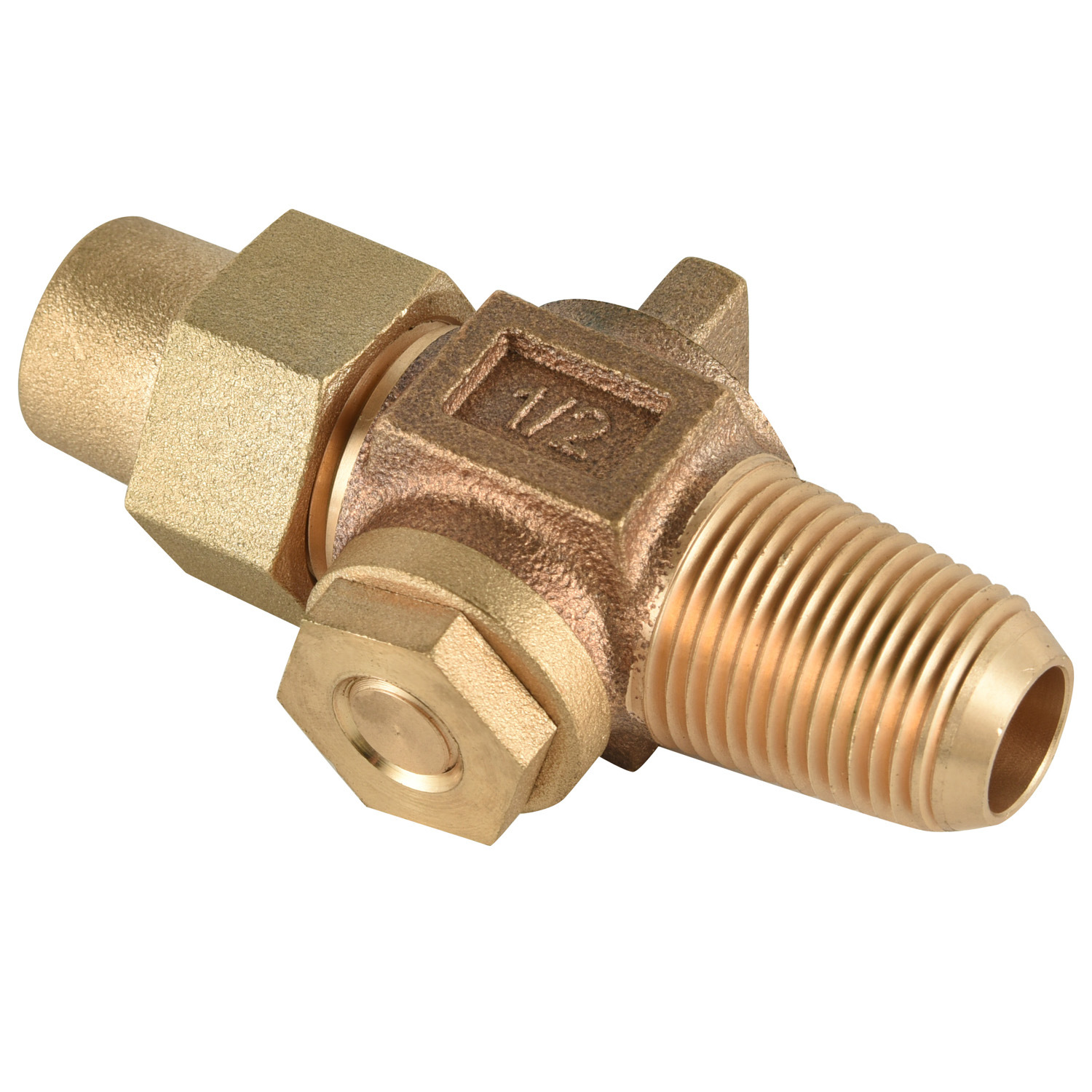
People frequently confuse these two essential network components. Clarifying the bill of materials prevents costly procurement errors. Both valves manage service line flow, but they serve distinct operational phases. Look carefully at their specific network location. You attach the main valve directly to the massive water main. It forms the exact origin point of the localized service line. In contrast, crews install curb stops much further down that same line. You usually find curb stops near the private property boundary or the public sidewalk. They mark the official transition point between public utility ownership and private plumbing.
Accessibility heavily dictates how utility crews interact with each component. Main line valves sit deeply buried under concrete or asphalt streets. You must deploy heavy machinery and excavate the roadway to reach them. This makes routine access practically impossible. Conversely, curb stops remain easily accessible from the ground surface. Utility workers use a vertical, cast-iron curb box to reach the valve actuator underground. They simply insert a long specialized key tool down the box. They perform routine water shut-offs for non-payment or residential plumbing repairs without digging up the street.
Most infrastructure development projects require both valve types. However, your engineering specifications will differ significantly between the two. Pressure ratings and connection ends vary based on their distinct operating environments. A curb stop experiences slightly lower dynamic pressure than the direct main line connection.
| Evaluation Feature | Corp Stop | Curb Stop |
|---|---|---|
| Network Location | Directly attached to the municipal water main | Positioned at the property boundary or public sidewalk |
| Accessibility Level | Requires heavy excavation and road disruption | Surface accessible via a vertical cast-iron curb box |
| Primary Function | Initial wet tap and emergency main isolation | Routine utility shut-off and private service isolation |
| Installation Method | Pressurized wet tap via specialized drilling machine | Standard inline plumbing connection |
Selecting the right product requires careful evaluation of three major engineering dimensions. You must analyze material safety, thread pitch, and flow dynamics.
Potable water applications offer zero margin for engineering error. Compliance with federal health guidelines is strictly mandatory.
For industrial or chemical treatment plants, evaluate alternative materials thoroughly.
Mismatched threads cause immediate catastrophic blowouts during the installation phase.
You must verify the component's maximum working pressure limit carefully.
Field installation always introduces numerous physical variables and hidden dangers. You must plan for these underground realities to avoid severe system failure.
First, carefully assess the structural integrity of the main pipe. Choosing between direct tapping and saddle tapping represents a critical engineering decision. Thick-walled ductile iron pipe often supports a direct thread tap perfectly. The iron provides enough deep thread engagement to secure the valve safely. However, thin-wall PVC or aging asbestos cement pipes completely lack necessary structural strength. Tapping directly into them invites immediate disaster. In these fragile cases, you must install a wrap-around service saddle. The saddle distributes physical stress across a much wider pipe surface area. This crucial step prevents catastrophic pipe fracture during the mechanical drilling process.
Next, acknowledge the strict equipment and tooling dependencies. Field crews require highly specific drilling and tapping machines to perform wet taps. Incompatible thread specifications between the machine adapter, the valve, and the pipe are incredibly dangerous. They often cause high-pressure blowouts during the delicate wet tapping procedure. A sudden blowout floods the trench instantly, severely endangering the installation crew. Always verify equipment compatibility and exact thread pitch before breaking ground.
Finally, outline a strict protocol for testing and verification. Never backfill an excavation trench too early. Institute a firm municipal policy for visual leak inspections under full system pressure. Conduct rigorous hydrostatic pressure testing at the connection point first. Discovering a slow weeping leak after pouring new asphalt is structurally and financially disastrous. Post-installation remediation costs municipalities thousands of dollars per single incident. Verify the seal integrity completely while the trench remains fully open and accessible.
Successful procurement of Corporation Stops hinges on precise engineering alignment. You must match underlying pipe materials, regional compliance standards, and specific thread types flawlessly. A single mismatch compromises the entire public distribution network. Reliable water service demands high-quality components from the very first connection point.
Take these specific next steps for your upcoming infrastructure projects. First, consult all internal project specification sheets thoroughly. Next, verify local municipal codes regarding mandatory lead-free material requirements. Always request detailed submittal data from prospective valve manufacturers. Finally, review all technical drawings to ensure exact dimensional fit. Following these strict evaluation steps guarantees a secure, leak-free connection for decades to come.
A: Yes. Utility crews install them using specialized tapping machines. These sophisticated tools drill directly into the active pipe while maintaining a highly pressurized seal. This "wet tapping" process ensures downstream users experience absolutely zero water service interruptions. Replacing an existing unit under pressure is more complex but entirely achievable using specialized extraction tools.
A: A CC thread (AWWA taper thread) features a significantly steeper taper than standard pipe threads. Manufacturers designed it specifically for direct tapping into thick-walled pipes like ductile iron. National Pipe Thread (NPT) has a shallower taper. Crews typically use NPT when threading the valve into a service saddle rather than directly into the main pipe wall.
A: No, they require almost zero routine maintenance. Once installed and buried deep underground, operators rarely interact with them again. Utility workers only operate these specific valves during severe emergencies, such as a massive service line leak, or when completely abandoning a specific property's municipal water service connection.
A: "Lead-free" indicates strict compliance with the federal Safe Drinking Water Act and NSF/ANSI 372 standards. It requires the wetted surfaces of the brass valve to contain a weighted average lead content of 0.25% or less. Municipalities strictly mandate these modern alloys to prevent heavy metal leaching into public drinking water supplies.


