

close
Choose Your Site
Global
Social Media
Views: 0 Author: Site Editor Publish Time: 2026-08-16 Origin: Site


Managing municipal water grids and industrial pipelines demands absolute precision. A corporation stop (often called a "corp stop") serves as a highly critical control valve. You install these valves directly onto a municipal water main or an industrial chemical line. They handle intense systemic pressure while enabling secure new connections. Engineers rely on these robust components to prevent catastrophic pipeline leaks.
Utility operations constantly require safe ways to tap into active lines. Shutting down an entire neighborhood grid just to isolate service laterals wastes massive municipal resources. Industrial plants face similar issues. They need to inject processing chemicals without halting production. You need reliable, leak-proof isolation methods to keep fluids flowing safely.
This guide breaks down the core functions and material selection criteria for these essential valves. We will explore compliance requirements and implementation realities needed for safe field installations. You will learn how to specify the correct valve parameters for both municipal distribution and industrial processing applications.
Understanding the fundamental purpose of these valves helps teams execute safer installations. They perform heavy-duty tasks deep underground or within complex industrial facilities. Utility workers and plant engineers rely on them for three primary operational functions.
Municipal water mains remain under constant, high pressure. Depressurizing a main to add a new residential service line causes unacceptable service interruptions. A corporation stop solves this exact problem. Technicians use a specialized tapping machine to drill into the live main. The tapping machine attaches directly to the closed valve. Once the drill bits breach the pipe wall, the technician retracts the bit. They then close the valve instantly. This process allows crews to connect new service laterals without ever shutting down the primary water supply. Integrating reliable Corporation Stops ensures this high-pressure tapping process remains safe and dry.
Water utilities need clear boundaries defining ownership and liability. The corporation stop acts as this vital jurisdictional marker. The utility company owns and maintains the large water main. They also own the physical connection point at the main. However, the property owner typically assumes responsibility for the service line running from the main to their building. The valve serves as the definitive shut-off point separating public infrastructure from private plumbing. If a homeowner’s service line ruptures, the utility can excavate the main and close this specific valve. This isolates the leak without affecting neighboring properties.
Industrial applications utilize these valves quite differently than municipal water grids. Manufacturing plants, water treatment facilities, and refineries use them within chemical feed systems. In these environments, the valve often houses a specialized injection quill. This quill extends directly into the center of the process pipe. It delivers concentrated chemicals precisely into the fastest moving part of the fluid stream. This promotes rapid chemical dispersion. The valve also prevents dangerous process fluids from flowing backward into the chemical dosing pumps. It acts as a critical safety barrier protecting sensitive injection equipment.
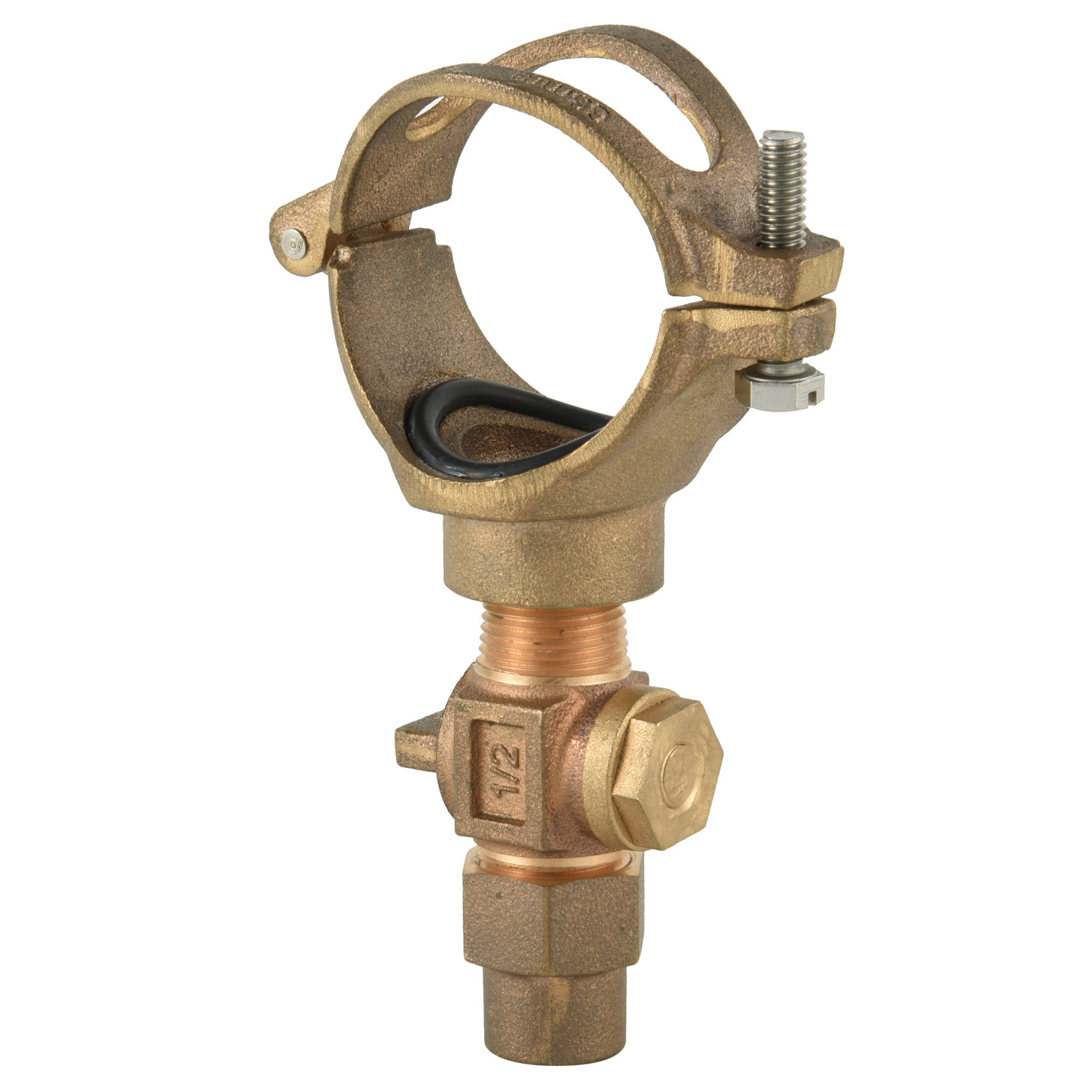
Procurement teams and junior engineers frequently confuse corporation stops and curb stops. Both are underground valves used in water distribution. However, they serve entirely different purposes. Conflating the two during the purchasing stage leads to disastrous installation failures. You must understand their distinct physical and operational differences.
Location dictates the design of underground water valves. We place them strategically based on who needs to operate them. The table below outlines these locational differences.
| Feature | Corporation Stop | Curb Stop |
|---|---|---|
| Installation Location | Directly on the municipal water main (usually under the street). | Near the property line, sidewalk, or curb. |
| Accessibility | Buried deep underground. Requires heavy excavation to access. | Easily accessible from the surface via a vertical curb box. |
| Operation Frequency | Rarely operated after the initial service tap installation. | Operated frequently for utility shut-offs or non-payment. |
We engineer these two valves for vastly different physical stresses. A corporation stop features a heavy-duty, reinforced body. It must withstand the extreme rotational torque of a tapping machine. It also endures direct stress from the pressurized water main. A curb stop prioritizes simple flow control. It does not handle live tapping stresses. Curb stops feature specialized operating heads designed to accept a long reach wrench from the surface. They focus purely on turning water on or off quickly.
Buyers must double-check their specifications before placing orders for new service laterals. Ordering a curb stop for a main-line tap will halt the entire project. Tapping machines cannot interface with curb stop threads. Conversely, installing a heavy-duty tapping valve at the property line wastes money. It also removes the ability to shut off water easily from the surface. Always verify the installation location before finalizing your parts manifest. Clear communication between field technicians and purchasing agents prevents these costly mix-ups.
Selecting the correct valve requires rigorous technical evaluation. You cannot simply pull a generic part from a catalog. System pressure, fluid chemistry, and local municipal codes dictate your choices. We evaluate these components across several critical dimensions.
Municipal drinking water systems strictly regulate materials. The law mandates the use of NL (No-Lead) brass. Components must conform to AWWA C800 and NSF/ANSI 61 standards. These regulations ensure no toxic lead leaches into public drinking water. Industrial chemical injection requires an entirely different approach. You must evaluate PVC, CPVC, PVDF, or specialized metallic alloys. The exact choice depends heavily on the corrosivity of the injected chemical. Sodium hypochlorite, for example, rapidly degrades standard metals and requires specialized plastics or titanium.
You must assess the maximum operating pressure of your entire system. Standard municipal water applications typically demand a 300 PSI rating. This provides a safe buffer above normal street pressures. Chemical dosing systems face highly variable pressures. Some industrial lines operate at low pressure, while others exceed 500 PSI. Temperature thresholds also play a major role. Hot industrial fluids weaken plastic bodies significantly. Always cross-reference the manufacturer’s pressure-temperature curves before specifying a plastic valve.
Inlet and outlet configurations cause the most confusion during specification. The inlet connects directly to the saddle or the water main. Water utilities highly prefer the AWWA tapered thread (often called a CC thread). This specific taper provides superior sealing characteristics on curved pipe walls. Industrial applications generally default to standard Iron Pipe Thread (NPT). You must also specify the correct outlet configuration. Options include flare fittings, compression fittings, or specialized mechanical grips. Your choice depends entirely on the service pipe material. Copper, PE (polyethylene), and PEX tubing all require completely different outlet connections to prevent blowouts.
Engineers must choose between modern ball valve designs and traditional plug valve designs. Ball valves provide exceptionally smooth, quarter-turn operation. They utilize internal Teflon seats to prevent sticking over decades of disuse. They offer full port flow, minimizing pressure drops. Traditional plug valves rely on a tapered brass plug seated directly against the brass body. Many older municipalities still require plug valves to match their legacy inventory. However, plug valves often require significantly more physical force to turn after sitting underground for years.
Theoretical specifications mean very little if field implementation fails. Installing these valves requires specialized knowledge and extreme caution. Crews operate in wet, muddy, and highly pressurized environments. You must understand the practical realities and physical risks associated with underground tapping.
Live tapping requires synchronized mechanical steps. Crews first install a heavy service saddle around the exterior of the water main. They thread the valve directly into this saddle. Next, they mount a specialized tapping machine onto the valve outlet. They open the valve and advance the drill bit through the valve body. The bit cuts a precise hole into the pressurized main. Once the cutter breaches the pipe, water rushes into the machine housing. The technician immediately retracts the bit past the valve ball. They quickly shut the valve to contain the pressure. They can then safely remove the tapping machine and connect the service lateral.
Incorrect installation procedures easily destroy brass components. Field crews face several distinct hazards during assembly:
These sealing failures result in catastrophic leaks. Repairing a blown tap requires dispatching an emergency crew to dig up the road a second time. This destroys project budgets and angers local commuters.
Industrial injection setups carry their own unique implementation risks. You are connecting a high-pressure chemical pump to an equally pressurized process line. The corporation stop must include an integrated check valve. This check valve prevents the main process fluid from pushing backward into the chemical tubing. If a check valve fails, raw process water backs up into the chemical storage tanks. This ruins expensive chemicals and destroys delicate dosing pumps. Industrial technicians must routinely inspect these check valves for chemical degradation or scale buildup.
Municipal maintenance protocols operate on a strict "install and bury" assumption. Once crews backfill the trench and pave the street, no one will touch that valve for fifty years. You cannot perform preventative maintenance on a buried asset. Therefore, material durability at the evaluation stage remains paramount. You must select components designed to survive decades in highly corrosive soil. Using cheap, non-compliant brass saves a few dollars upfront but guarantees a massive excavation bill a decade later. True reliability means specifying parts that never require secondary access.
Navigating the complex landscape of valve manufacturers requires a strategic approach. You want to build a resilient supply chain that minimizes field errors. Smart engineering teams use specific shortlisting logic to choose their vendors and finalize their designs.
Municipalities and large industrial plants benefit immensely from standardization. Do not allow contractors to install a random mix of thread types and valve designs across your system. Standardize on a single trusted manufacturer. Mandate a specific inlet thread type (like AWWA CC) and a specific outlet connection for all new installations. Standardization drastically reduces inventory complexity in your maintenance yard. It ensures your field crews always have the correct tapping machines and tools on their trucks. Tooling mismatches in the field waste hours of labor. Keeping your system uniform prevents these frustrating delays.
You must evaluate the manufacturer just as rigorously as the valve itself. High-quality suppliers provide comprehensive technical support. Look for manufacturers utilizing domestic foundry operations. Domestic manufacturing often ensures stricter adherence to AWWA no-lead compliance standards. For industrial applications, ensure the vendor offers custom injection quill lengths. You need the ability to size the quill perfectly to your specific pipe diameter. Furthermore, demand robust documentation. A reputable vendor supplies detailed pressure-temperature curves, chemical compatibility charts, and comprehensive installation bulletins. If a vendor cannot provide technical spec sheets quickly, cross them off your shortlist.
Procurement teams often make the mistake of sorting suppliers by the lowest unit price. This mindset creates massive financial risks. You must shift your focus entirely to the cost of failure. A cheap valve might save fifty dollars on the initial purchase order. However, if that valve cracks underground due to poor metallurgy, the consequences are severe. You will pay thousands of dollars for an emergency excavation crew. You will incur costs for road closures, repaving, and public disruption. In industrial settings, a failed injection valve causes unplanned system downtime and potential regulatory compliance fines. Purchasing premium, fully compliant Corporation Stops acts as an insurance policy against these catastrophic expenses. Quality hardware guarantees long-term operational peace of mind.
A properly specified corporation stop provides immense strategic value to any fluid distribution network. These specialized valves protect system integrity during high-risk live tapping operations. They establish clear jurisdictional boundaries for utility companies. In industrial environments, they ensure safe and precise chemical dispersion while protecting upstream dosing equipment. Their role in maintaining overall system safety cannot be overstated.
You must rigorously audit your current purchasing specifications. Review your hardware against the latest AWWA standards for lead-free compliance. Check your industrial material choices against updated chemical compatibility charts before finalizing any procurement lists. Upgrading your specifications now prevents dangerous field failures later.
Take proactive steps to secure your infrastructure today. Consult with engineering specialists to correctly size your chemical injection quills. Review detailed manufacturer spec sheets to guarantee you are sourcing reliable, AWWA-compliant brass components for your next major installation.
A: A corporation stop connects directly to the municipal water main deep underground. It allows crews to tap the pressurized main. A curb stop sits near the property line closer to the surface. Utilities use curb stops to easily turn water service on or off for individual customers.
A: Yes, but it requires highly specialized equipment. Crews can use line-freezing techniques to create an ice plug in the service line. Alternatively, they use specialized insertion tools and extraction machines to swap the valve under pressure. However, this is dangerous and expensive.
A: AWWA CC threads feature a steeper taper than standard NPT threads. This specific taper provides a much wider, more secure sealing surface when threaded into the curved wall of a pipe saddle. It prevents leaks more effectively under intense municipal water pressures.
A: Standard municipal water valves typically do not include check valves. They are simple isolation valves. However, chemical injection corporation stops almost always feature an integrated check valve. This prevents hazardous process fluids from backing up into the chemical dosing pumps.


