

close
Choose Your Site
Global
Social Media
Views: 0 Author: Site Editor Publish Time: 2026-08-08 Origin: Site


Managing municipal water distribution or chemical treatment operations requires absolute control over highly pressurized systems. The corporation stop serves as the primary shut-off valve connecting a municipal water main to a residential or commercial service line. It also acts as a secure injection point for chemical feed systems operating under immense pressure.
Selecting the incorrect valve mechanism often triggers catastrophic leaks during live, pressurized wet-tapping. Improper material selection routinely forces non-compliance against stringent municipal safety codes. Poorly specified components also guarantee premature failure in harsh chemical dosing applications. Engineers, utility managers, and installers must understand exactly what operates inside these heavy-duty brass fittings.
We will explore the internal mechanisms powering these essential utility connections. You will discover how traditional plug designs compare directly against modern ball valves. This technical guide delivers the exact engineering insights you need to specify the correct valve type for your upcoming infrastructure project.
Understanding the internal anatomy of these critical fittings ensures long-term operational success. Manufacturers engineer these devices to withstand decades of subterranean neglect or continuous chemical exposure. Today, three primary valve mechanisms dominate the industry.
The ground-key plug valve represents the historical backbone of municipal water infrastructure. This mechanism relies on a precisely machined, tapered brass or bronze plug. The plug rotates vertically inside a perfectly matched, tapered body cavity.
Historically, municipalities accepted this design as the absolute industry standard. The design requires a heavy coating of mechanical grease applied during factory assembly. This lubrication maintains the watertight seal and prevents the metal surfaces from binding under pressure.
However, this traditional mechanism suffers from severe long-term limitations. It demands significantly higher operating torque to actuate. Over decades of underground inactivity, the factory grease dries out or washes away. The bare metal-on-metal contact often causes the plug to seize completely, making future shut-offs nearly impossible without breaking the valve handle.
Most utility districts now mandate the modern ball valve design for new installations. This mechanism features a highly machined spherical brass or stainless steel ball. A central port runs straight through this sphere. The ball rotates effortlessly between two fluorocarbon seats, typically made from PTFE (Teflon).
Currently, the ball valve is the most frequently specified valve type for modern waterworks upgrades. It completely eliminates the ancient metal-on-metal friction problem.
The advantages heavily outweigh any initial cost differences. Operators require significantly lower operating torque to open or close the line. The dual PTFE seats provide exceptional bi-directional, bubble-tight sealing. Furthermore, this mechanism entirely eliminates the need for internal mechanical grease, protecting the potable water supply from potential contamination.
Chemical feed applications demand a completely different approach. Facilities using Corporation Stops for wastewater treatment or water purification must inject harsh chemicals like sodium hypochlorite directly into pressurized lines. These specialized fittings incorporate an internal spring-loaded check valve.
The internal check mechanism usually features a ball or poppet style design. Its singular purpose is preventing the highly pressurized process water from backing up into the chemical dosing lines. If a chemical feed pump fails or requires routine maintenance, the internal check valve instantly snaps shut. This protects operators from hazardous chemical exposure and prevents catastrophic cross-contamination within the plant.
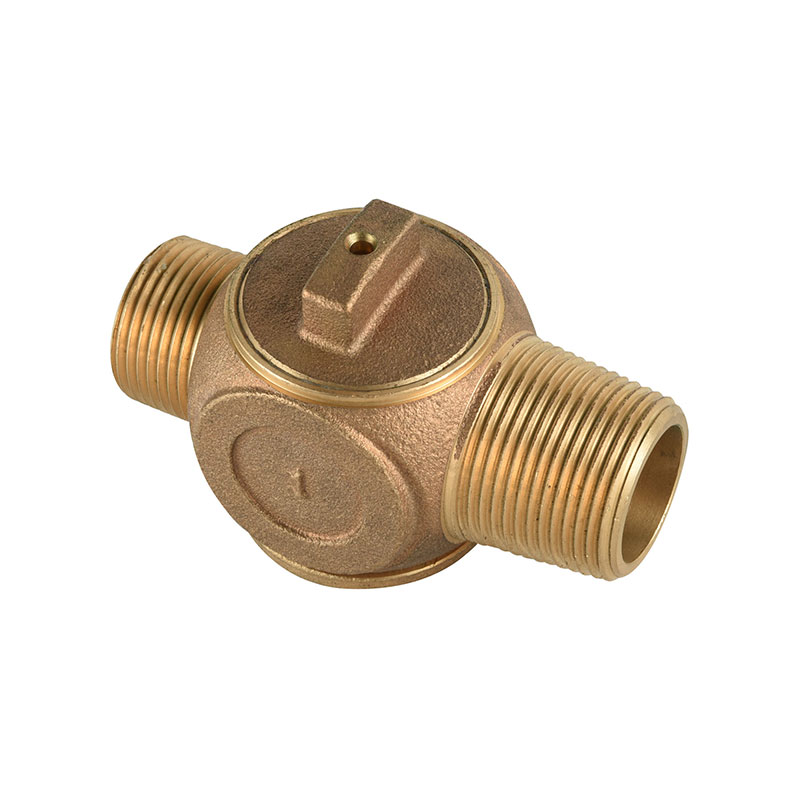
Engineers evaluate valves based on physical exertion, longevity, and fluid dynamics. Comparing the older plug style against the modern ball style reveals stark operational differences.
Actuating a valve during a live wet-tap is physically demanding. Operators must manipulate the valve handle while managing heavy tapping machinery under active line pressure. Tapered plug valves generate massive friction. Workers often strain against the stiff plug, sometimes requiring extended leverage bars to force it open.
Ball valves offer incredibly smooth actuation. The spherical ball glides against the slick PTFE seats. Operators achieve full flow via a simple, low-effort quarter-turn (90 degrees). This dramatically reduces mechanical strain on the tapping saddle, protects the pipe main, and prevents operator fatigue.
We must evaluate how these valves survive decades underground. Ground-key valves rely on metal-on-metal friction. Over time, grit and sand enter the municipal lines. This sediment scores the brass plug, ruining the smooth surface. Once the surface scratches, the seal fails permanently.
Ball valves utilize a metal-on-PTFE interface. PTFE provides inherent flexibility. If minor sediment passes through, the pliable seats can often conform around small particles without permanently losing their bubble-tight seal. However, heavy sediment can still tear a PTFE seat. To mitigate this risk, operators should always flush the main line aggressively before finalizing the service connection.
Hydraulic efficiency remains a critical metric for water distribution. We measure this efficiency using the Cv value, representing the volume of water passing through the valve at a specific pressure drop.
Older plug designs often feature restricted, irregular flow paths. The fluid must navigate through the narrow tapered opening, causing turbulence and pressure loss. Conversely, modern ball valves typically offer a full-port design. The internal bore matches the pipe diameter exactly. This minimally restricted flow path drastically reduces pressure drop, ensuring maximum volume delivery to the end user.
| Feature | Ground-Key Plug Valve | Modern Ball Valve |
|---|---|---|
| Sealing Interface | Metal-on-Metal (Requires Grease) | Metal-on-PTFE (Grease-Free) |
| Operating Torque | High (Prone to seizing) | Very Low (Smooth quarter-turn) |
| Flow Path | Restricted | Full-Port (Unrestricted) |
| Maintenance | High risk of binding over time | Virtually maintenance-free |
Strict regulatory frameworks govern municipal water infrastructure. You cannot legally install non-compliant brass fittings into a public potable water system.
The American Water Works Association sets the absolute baseline for underground service line valves. AWWA C800 dictates strict structural integrity rules. The standard covers exact thread dimensions, minimum pressure ratings, and body thickness requirements. When a fitting carries the AWWA C800 stamp, it guarantees the component will survive heavy soil loads and standard hydrostatic pressure testing without fracturing.
Modern safety regulations strictly prohibit lead leaching into drinking water. The NSF/ANSI 61 and 372 standards mandate rigorous No-Lead (NL) requirements for all wetted surfaces. Manufacturers must utilize specific unleaded brass or bronze alloys.
Common compliant alloys include C89833 and C87850 bismuth brass. These advanced materials provide the necessary tensile strength and machinability without relying on toxic lead additives. Installing older, leaded inventory poses massive legal and health risks to the utility district.
Best Practice: Always request material test reports (MTRs) from your supplier to verify exact alloy compositions before burying the valves.
Chemical injection applications completely alter the material requirements. Standard NL brass degrades rapidly when exposed to aggressive media like sulfuric acid or concentrated sodium hypochlorite.
For chemical environments, you must evaluate alternative body materials. Engineers frequently specify CPVC, PVDF, or 316 Stainless Steel bodies to resist severe corrosion. Furthermore, you must match the internal elastomers to the chemical. Choosing between Viton (FKM) and EPDM O-rings dictates whether the valve survives ten years or dissolves in ten days. Always consult a chemical resistance chart before specifying dosing valves.
No single valve design works perfectly for every scenario. You must match the internal mechanism and body material directly to the environmental demands.
Even the best-engineered valve fails if installed incorrectly. Field crews face immense pressure during live infrastructure repairs. Understanding common installation traps saves time, money, and water.
Utilities routinely perform "wet taps" on live, pressurized mains to avoid shutting down entire neighborhoods. During this process, thread compatibility becomes absolutely critical.
Many installers confuse AWWA (CC) tap threads with standard NPT threads. CC threads feature a significantly steeper taper design. This steep taper allows the brass valve to wedge aggressively into the softer ductile iron pipe, creating a permanent mechanical seal. If an operator forces an NPT-threaded valve into a CC-tapped hole, cross-threading occurs immediately. This inevitably triggers a catastrophic blowout once the tapping machine breaches the pressurized main.
Excessive force destroys modern ball valves. Many inexperienced installers apply heavy pipe wrenches directly to the center of the valve body.
Common Mistake: Squeezing the central ball cavity with a wrench physically warps the thin brass wall. When the wall distorts, it crushes the internal PTFE seats against the steel ball. This instantly ruins the bubble-tight seal, guaranteeing a slow underground leak. Always apply wrenches strictly to the designated, heavily reinforced wrench flats located at the inlet or outlet ends.
Before issuing a purchase order, systematically verify the field requirements. Missing a single specification delays the entire project.
While this specialized fitting remains hidden underground, its internal mechanics dictate the reliability of the entire water distribution network. The industry has definitively shifted away from traditional ground-key plug designs. Modern PTFE-seated ball valves now provide the operational reliability, low torque, and superior sealing required by modern utilities.
When selecting your next batch of valves, you must always let the specific medium drive your specification. Waterworks demand robust brass ball valves, while chemical applications require specialized alloys and integrated check mechanisms. By strictly adhering to AWWA C800 guidelines, verifying your thread tapers, and training your crews on proper wrench placement, you will ensure decades of leak-free performance.
A: Municipal water corporation stops are generally replaced rather than rebuilt. They remain permanently buried underground, making field repairs highly impractical. Conversely, chemical injection corporation stops operate above ground in treatment facilities. These specialized units often feature replaceable O-rings, check-valve springs, and poppets to extend their operational lifespan.
A: AWWA (CC) threads feature a much steeper taper compared to standard NPT threads. Engineers specifically designed the CC taper to wedge tightly and seal directly into tapped cast iron or ductile iron pipes. Forcing NPT threads into a CC-tapped hole guarantees severe cross-threading and dangerous pressure leaks.
A: Traditional ground-key plug valves are non-directional and can rotate a full 360 degrees without damaging the mechanism. Modern ball valves require a strict, physical 90-degree operational stop. This quarter-turn stop ensures the operator perfectly aligns the internal ball port with the fluid flow path.
A: While older plug valves remain grandfathered into many outdated utility districts, modern standard operating procedures overwhelmingly specify ball valves. Ball valves deliver significantly lower operating torque, prevent underground seizing, and provide superior bubble-tight sealing without relying on internal mechanical grease.


