

close
Choose Your Site
Global
Social Media
Views: 0 Author: Site Editor Publish Time: 2026-10-09 Origin: Site


When a pipe bursts, the hidden impact of plumbing failure becomes painfully obvious instantly. Water damage, emergency plumber rates, and sudden operational downtime easily eclipse the upfront savings of cheap materials. We often confuse temporary fixes for permanent plumbing infrastructure. Unfortunately, installing a fixture that seizes or leaks right when you need it creates a massive, unpredictable liability for any property. Relying on substandard metals or plastics leaves your entire system vulnerable to sudden pressure changes. This guide establishes an evidence-based framework for evaluating different materials. You will learn how to properly assess structural integrity, pinpoint corrosion resistance factors, and guarantee long-term mechanical reliability. We will look at both the exterior housing and internal mechanisms. By the end, you will understand exactly how to specify the right components for residential, commercial, and industrial water systems.
Material composition (brass vs. bronze) dictates resistance to hard water scaling and dezincification.
A Brass Stop Valve offers the best balance of cost and durability for residential potable water systems, provided it meets lead-free compliance.
Heavy-duty applications benefit from a Bronze Stop Cock, offering superior corrosion resistance and higher tensile strength.
Internal mechanisms (1/4-turn ball vs. multi-turn compression) are just as critical as the exterior housing material for preventing seized valves.
You expect a plumbing system to work silently behind the walls. A stop valve often remains inactive for years. Yet it must perform flawlessly during sudden emergencies or routine maintenance. When a leak occurs, you rely entirely on these localized shut-offs. If the handle refuses to turn, a minor repair quickly escalates into a major flood.
Historical data shows frequent failures stem from specific structural weaknesses. We can categorize these common failure modes to better understand system vulnerabilities:
Galvanic Corrosion: This destroys mismatched metal joints. It happens rapidly when you mix incompatible metals without proper isolation.
Brittle Cracking: Cheap zinc or pot metal alloys snap under standard wrench torque. They cannot handle stress.
Gasket Degradation: Rubber washers inside older mechanisms dry out, crumble, and fail to hold back water pressure.
To ensure a successful installation, you must demand strict zero-leak thresholds. The unit must actuate smoothly even after a decade of dormancy. Always guarantee complete compliance with your local plumbing codes. Prioritizing these success criteria ensures your isolation points remain reliable under pressure.
Material Properties Comparison Matrix
Material Type | Corrosion Resistance | Tensile Strength | Ideal Application |
|---|---|---|---|
Standard Brass (DZR) | High | Moderate | Residential Potable Water |
Solid Bronze | Very High | Very High | Industrial / Underground |
Zinc Alloy (Pot Metal) | Low | Low | Temporary (Not Recommended) |
POM / Plastic | Moderate | Very Low | Low-Pressure Manifolds |
Plumbers heavily rely on brass for standard residential installations. A high-quality Brass Stop Valve brings excellent malleability and high heat tolerance to the table. This metal resists everyday corrosion well. It provides a solid, threaded connection point. You can confidently install it under sinks or behind toilets for everyday shut-off needs.
However, you must remain aware of specific risk factors. Standard brass remains vulnerable to a process called dezincification. This occurs in highly acidic or highly alkaline water conditions. The water leaches zinc from the alloy, leaving behind a weak, porous copper shell. The fitting will eventually weep or break off entirely.
When procuring materials, you must mandate DZR (Dezincification Resistant) brass. DZR brass contains specific metallurgical additives to prevent zinc leaching. Furthermore, you must verify "Lead-Free" certification. Any fixture entering a potable water stream must strictly comply with modern safety regulations.
Certain environments require a step up in durability. Bronze contains a significantly higher copper content combined with tin. This composition yields superior structural integrity. A Bronze Stop Cock boasts near-immunity to cracking and dezincification. You rarely see these heavy-duty fittings fail from internal water chemistry.
We recommend bronze for very specific use cases. It serves perfectly in harsh water conditions. You should also specify it for underground installations and industrial fluid lines. These environments subject fittings to extreme external and internal pressures. Standard metals simply degrade too quickly here.
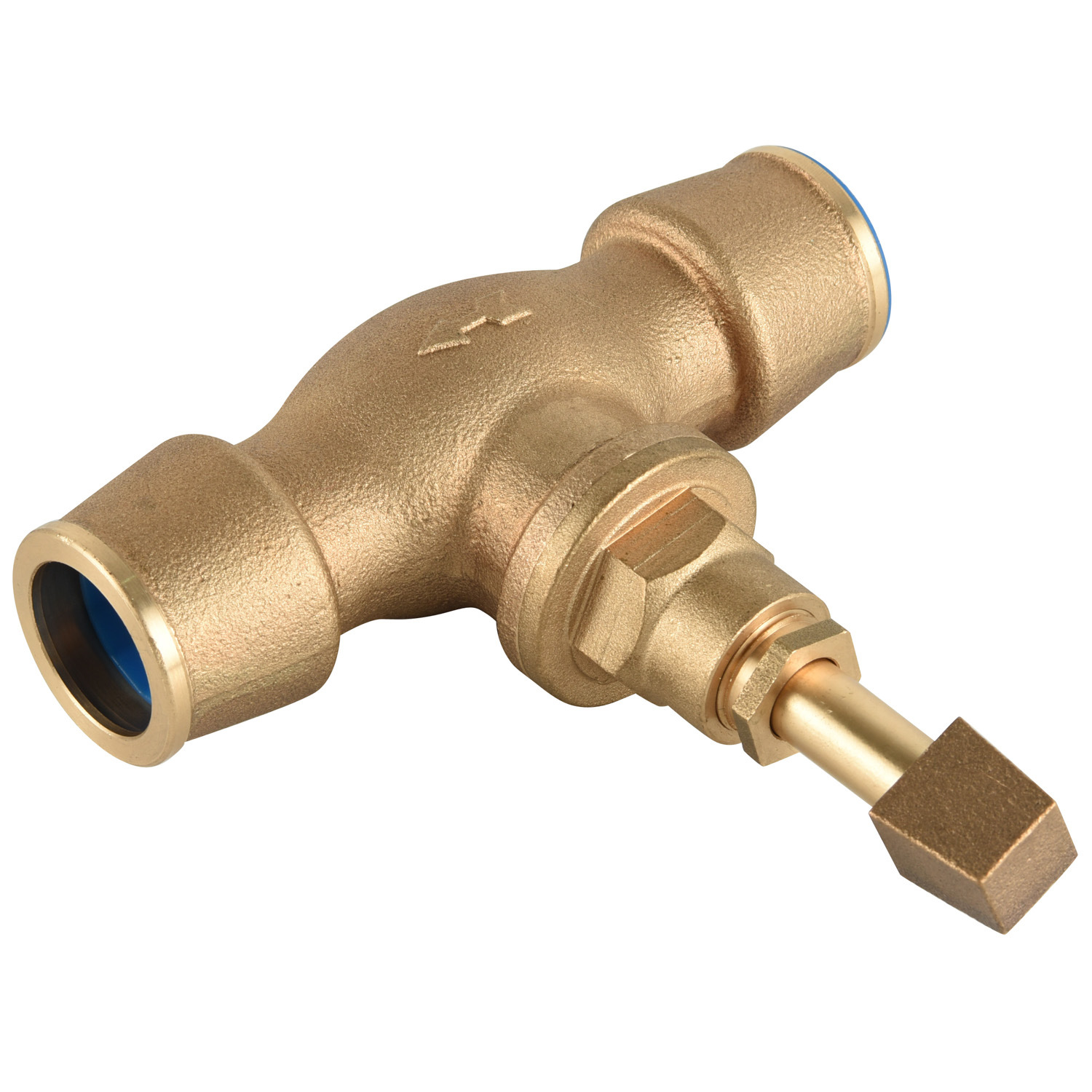
For high-torque environments, we suggest utilizing a Bronze Stopcock with Square Head. This specific design requires specialized wrenches to operate. It provides essential tamper resistance. Municipalities and industrial facilities often use square-head variants for main water line shutoffs to prevent unauthorized access.
You must actively avoid certain materials when building permanent plumbing infrastructure. Zinc alloys, often called pot metal, show incredibly high historical failure rates. They look shiny and heavy on the shelf. However, they remain highly prone to snapping under standard wrench torque during installation.
Plastic, PVC, and POM materials also present risks. They perform adequately for temporary setups or low-pressure PEX manifolds. But they lack essential thread integrity. Plastic threads cross-thread easily. Furthermore, they lack the impact resistance of metal. An accidental kick under a kitchen sink can easily shatter a plastic fitting, causing immediate flooding.
The exterior housing material only tells half the story. The internal mechanism dictates whether the handle will actually turn ten years from now. You must evaluate the internal engineering carefully.
Multi-Turn (Compression) Valves:
Older designs rely heavily on multi-turn compression mechanisms. You must spin the handle several times to close them. They push a rubber washer down onto a metal seat to stop the water flow. Unfortunately, these rubber washers harden over time. They compress permanently and ultimately disintegrate. This degradation leads directly to stem leaks. Furthermore, mineral scale builds up on the internal threads, creating a very high risk of the entire mechanism seizing permanently.
1/4-Turn (Ball) Valves:
Modern professionals overwhelmingly prefer 1/4-turn ball mechanisms. These utilize a highly polished stainless steel or plated brass ball. This ball sits trapped tightly between two Teflon (PTFE) seats. You simply rotate the handle ninety degrees to open or close the flow line.
Our evaluation verdict heavily favors the 1/4-turn mechanism. It delivers far superior long-term reliability. Teflon repels mineral adhesion, making the unit highly unlikely to seize. It scales much less rapidly than exposed rubber and brass threads. Additionally, the handle position provides immediate visual confirmation of the open or closed status.
Even the finest materials will fail if you install them incorrectly. You must follow strict mechanical best practices to preserve the integrity of the plumbing system.
First, address galvanic corrosion immediately. You run a massive risk when threading dissimilar metals together. For instance, connecting a brass fixture directly to galvanized steel piping creates a battery effect. The steel will rapidly rust and fail. You must use a dielectric union or proper brass transition fitting to isolate the metals electronically.
Second, ensure strict fitting compatibility. You must match the inlet type exactly to the existing pipe material. Common connections include sweat (solder), compression, FIP/MIP threads, and push-to-connect. Forcing a mismatched connection causes localized stress fractures. For example, using a standard compression ring on CPVC without proper internal stiffeners will inevitably crush the plastic pipe.
Finally, respect the dangers of torque and over-tightening. Many installers apply excessive force. Over-tightening severely risks cracking the cast bodies. It also distorts internal compression rings, creating tiny leak paths. We emphasize the critical need for standardized torque practices. Snug the nut firmly, then add only a quarter turn. Let the mechanical advantage do the sealing work.
You can eliminate guesswork by following a structured specification process. Use these specific steps to match the component to the exact environmental demands.
Step 1: Assess Water Quality. Test the local water supply first. Hard or highly aggressive water pushes your specification away from standard alloys. You must mandate DZR brass or solid bronze to survive these harsh chemical conditions.
Step 2: Determine Actuation Frequency. Think about how often someone will turn the handle. Infrequent use necessitates 1/4-turn PTFE-seated ball mechanisms. Multi-turn units will almost certainly seize if left untouched for several years.
Step 3: Verify Compliance. Always check the stamp on the metal body. You must ensure NSF/ANSI 61 and 372 certifications exist for any component entering potable water streams. This guarantees strict lead-free compliance.
Step 4: Select the Proper Form Factor. Analyze the pipe orientation before purchasing. Select angle stops for pipes exiting the wall. Select straight stops for pipes exiting the floor. Matching the form factor minimizes flow restriction and prevents bending stress on the supply lines.
The overall predictability of any plumbing system relies heavily on its weakest isolation points. If you install cheap, unreliable materials, you compromise the entire network. Temporary savings quickly evaporate when a weak housing cracks or an internal gasket fails under pressure.
We recommend standardizing your procurement strategy immediately. Insist on DZR brass or solid bronze bodies. Pair these strong exterior housings with 1/4-turn ball mechanisms exclusively. Taking these precise action steps drastically reduces catastrophic failure risks and maintenance frequency. Update your facility guidelines today to mandate these superior specifications, ensuring your plumbing infrastructure remains safe and reliable for decades.
A: Valves usually get stuck due to heavy mineral buildup, known as scaling, on their internal threads. In older multi-turn designs, rubber gaskets degrade, swell, or disintegrate over time. This combination of scale and swollen rubber physically locks the internal stem, making it impossible to turn the handle without breaking it.
A: The primary difference lies in the metallurgy. Brass utilizes zinc as its primary additive to copper, while bronze utilizes tin. Bronze offers significantly higher tensile strength and much better overall corrosion resistance. While bronze comes at a higher price point, it rarely suffers from dezincification or cracking.
A: Push-to-connect units rely heavily on internal rubber O-rings to maintain a seal. These O-rings remain susceptible to long-term degradation and dry rot. In contrast, soldered sweat joints or mechanical compression fittings offer a permanent metal-to-metal bond. Therefore, traditional mechanical bonds provide superior long-term reliability.
A: When installed correctly in standard municipal water conditions, a high-quality unit should provide extensive longevity. You can realistically expect a lifespan of 15 to 25 years or more from a solid brass or bronze 1/4-turn ball mechanism before it requires any mechanical replacement.


